

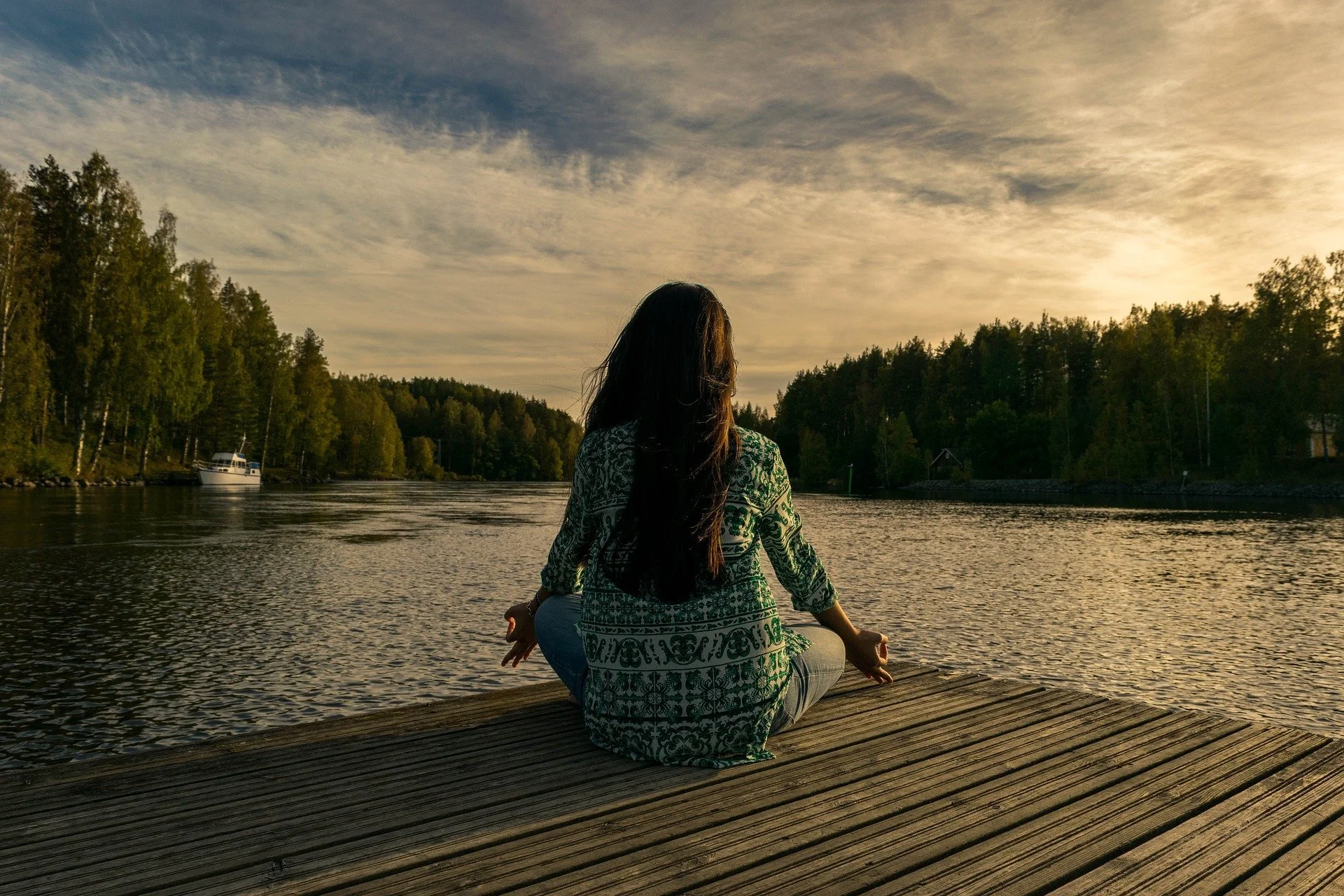
Go Within
"Quiet the mind, and the soul will speak."
- Ma Jaya Sati Bhagavati
Meditation, created thousands of years ago, is when the mind is free from agitation.
During meditation, our minds create a sense of balance for we are not reminiscing of the past nor anticipating the future - we find awareness and contentment within the present moment.
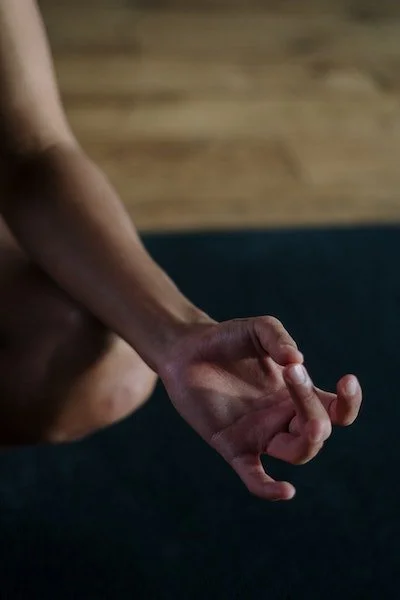
What is Meditation?
What meditation is not:
Thinking or contemplating
Daydreaming or fantasizing
Arguing between thoughts
Intensifying the thinking process
Hypnosis or autosuggestion
What meditation is:
A quiet, effortless, one-pointed focus of attention and awareness.
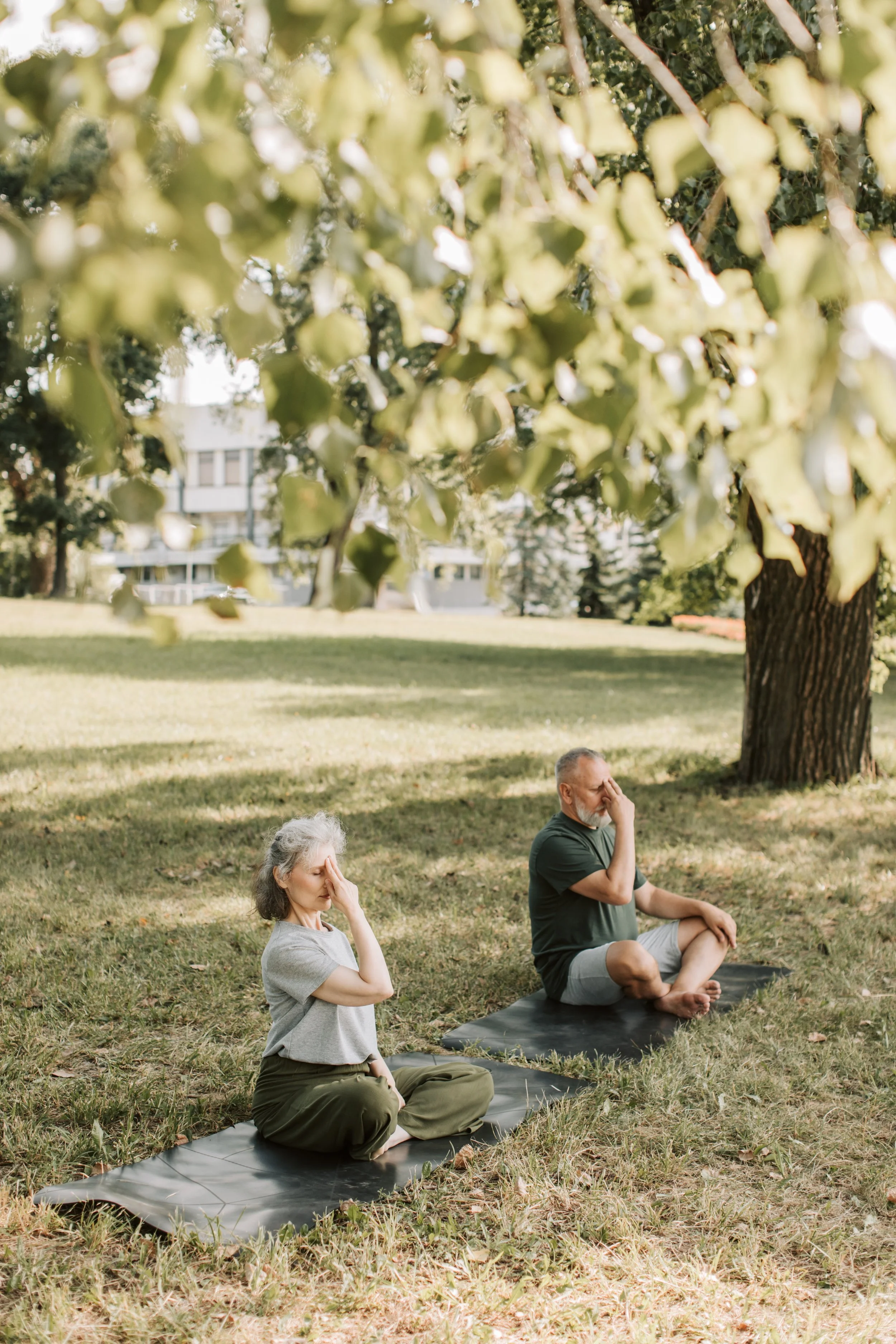
Breathing Exercises have an enormous amount of benefits in preparing the mind for meditation and improving health.
Why Meditate?
The amount of damage stress can do to the body is significant, so imagine how our mind and bodies will flourish when our stress levels decrease.
During the practice of meditation, we relax the autonomic nervous system and muscular tension by focusing the mind on say, our breath. Deep breathing alone helps to bring more oxygen to the brain, resulting in the ability to think more clearly.
For example, when you see a person taking deep, exasperated breaths when they’re angry or nervous, they are attempting to control their emotions. This act is our mind’s initial response to calming the nerves in stressful situations so we can act appropriately.
Pulling the mind away from our worries, fears or other thoughts darting back and forth in our brain gives us a chance to mentally take a step back, observe, and approach the situation with a more relaxed and clear way of thinking.
How to Get Started
1) Begin seated in a simple cross-legged position or sitting with your legs extended out in front of you (suitable if you have any knee pain). If you need to, you can practice sitting against a wall or in a chair.
Before getting started, make yourself as comfortable as possible so you avoid feeling discomfort during your meditation. You can always place a pillow underneath your tailbone and/or knees for more comfort and support.
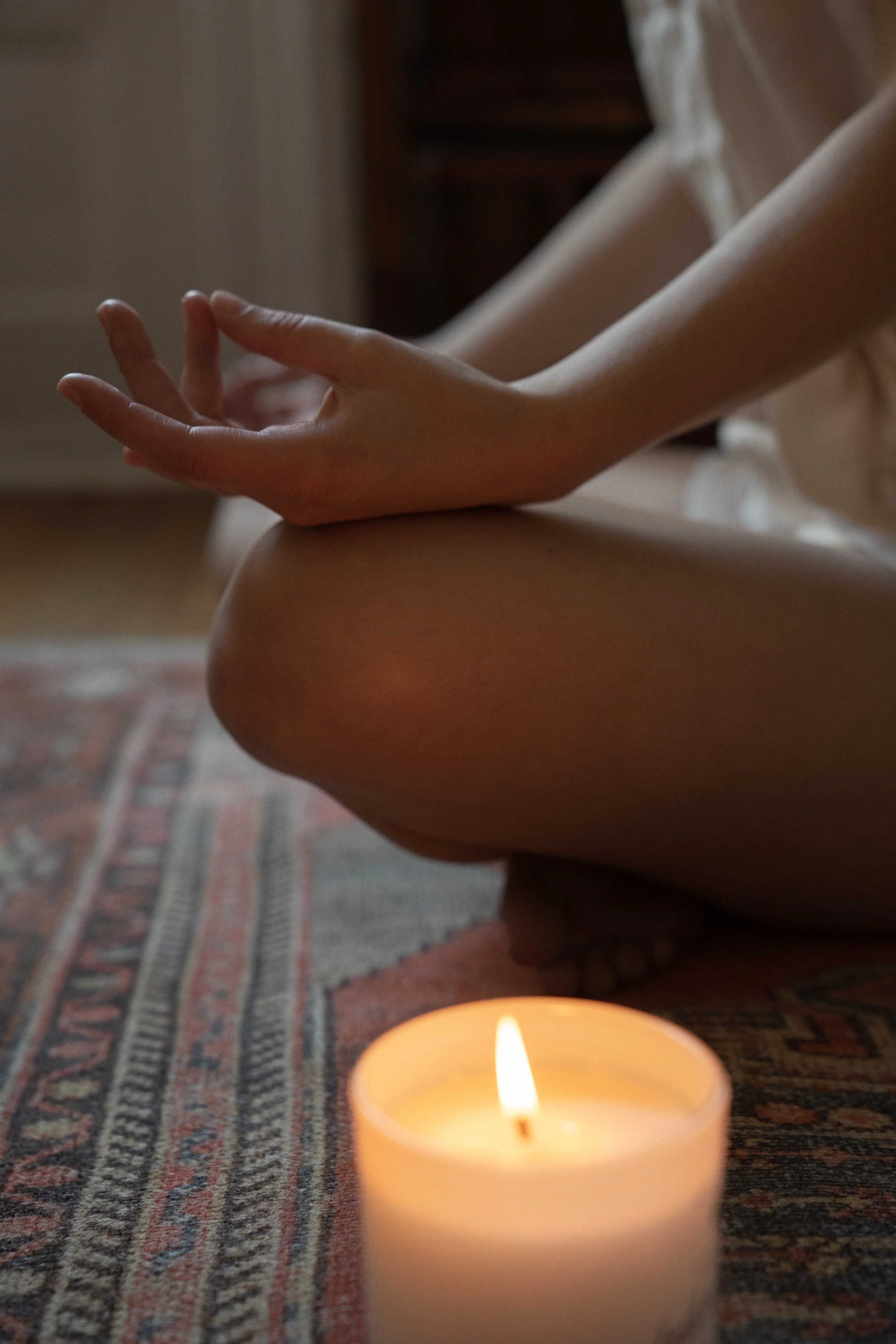
2) Let your palms rest on your thighs or knees (some like to bring fingers to a particular mudra, as shown in the picture above), then relax your shoulders down and soften any tight muscles in your face - such as the corner of your eyes, forehead, jaw.
4) Breathe in deeply through your nose, and out through your mouth.
5) After a couple times of deep breathing, you can extend the breathing by inhaling and count to 4 seconds, then exhale and count to 8 seconds.
Often throughout the day we hold our breath when we are hard at work or lost in our studies and other stressful situations. This counting exercise helps to teach us how to lengthen our exhales, take notice of when we are holding our breath, and letting it go.
6) Continue for 5-10 minutes, or listen to your intuition and meditate for as long as you feel necessary. A goal to work up to can be 30 minutes or even, an hour.
Just as there are many different paths to climb a mountain, there are also a variety of meditation techniques.
All have the same goal: achieving a state of inner concentration, calmness, and serenity.
We do this not by trying to make the mind empty, which is impossible anyway, but by allowing the mind to focus on one element or object, leading attention further inward.
By giving ourselves one internal focus of attention, we help the mind stop other stressful mental processes such as worrying, planning, thinking, and reasoning.
Select a technique below to learn more.
-
Breathing exercises have a great amount of benefits in preparing the mind for meditation and improving health.
Practicing these exercises help calm the nervous system and control reactions such as anger, anxiety, and much more.
Find step-by-step breathing technique instructional videos through our online studio by clicking here.
-
If new to meditation, it may be difficult to get started without a teacher or guide present.
A guided meditation is voice guided and may be done prerecorded or live by an experienced instructor. This type of meditation uses imagery or visualization and may use the senses such as smells, sights, sounds, and textures.
If you are interested in a guided meditation led by Gates To Yoga, you can find these videos on our online yoga studio.
-
Mantras are sounds or vibrations which are used to concentrate the mind in meditation.
A mantra may be a word, phrase, a syllable, or set of sounds that is repeated to uplift and keep us focused.
Many different kinds are used throughout the world, such as; Om, Amen, and Shalom. You can create your mantra such as, "I am love" or "Relaxation". You can say your mantra out loud or silently during your meditation.
-
Mindfulness Meditation is an increased awareness and acceptance of the present moment; it is a focus on the experience during meditation such as our thoughts and emotions.
During our experience, our goal is to observe these thoughts and emotions and let them pass without judgement, then return back to our object of focus (for example, the breath).
-
Qi Gong is a part of traditional Chinese medicine. This practice combines meditation, relaxation, physical movement and breathing exercises.
-
A form of Chinese martial arts; perform a self-paced series of postures or movements slowly and gracefully while practicing deep breathing.